Nizo Luxury: where its Google clicks came from Search Console, June 2026
Google search clicks from searches answered by its Google listing, not its web pages.
Background
"SEO for Google My Business" (GBP SEO) is the work of making that listing show up for the searches that matter: the right category, the real name, complete fields, reviews arriving at a steady pace. It sits next to the website's SEO, not in place of it. This guide explains how the pieces work together for a Los Angeles business, and links to a post for each part.
What local search is
What holds when the searcher moves
| Kind of result | Another LA point | Same spot, searched again |
|---|---|---|
| Google Maps | 2.3% | 100% |
| Local pack | 19.2% | 82.3% |
| Web results | 33.6% | 30.2% |
Local search is any search where Google decides the answer depends on a place: "plumber in Glendale", "lash extensions near me", or just "dentist" typed on a phone in Koreatown.
The details
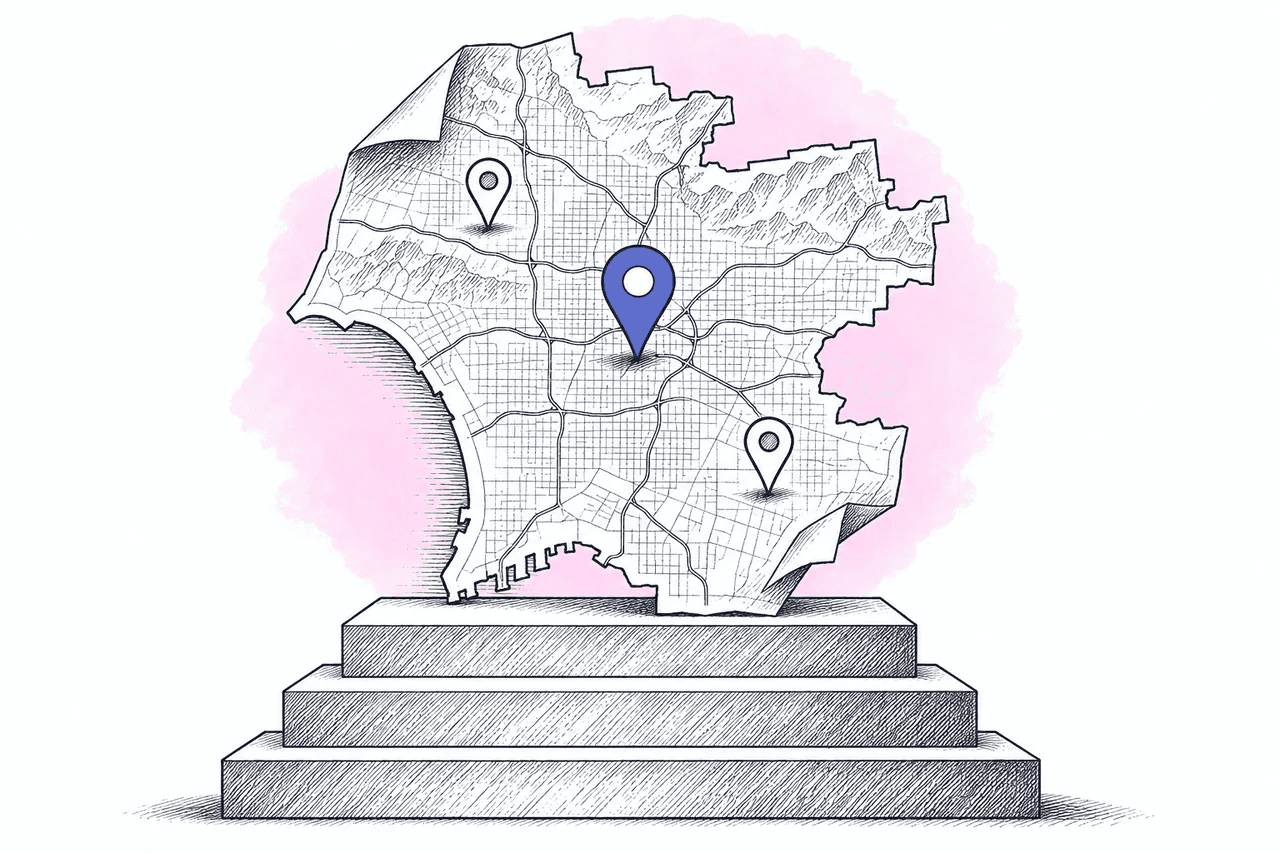
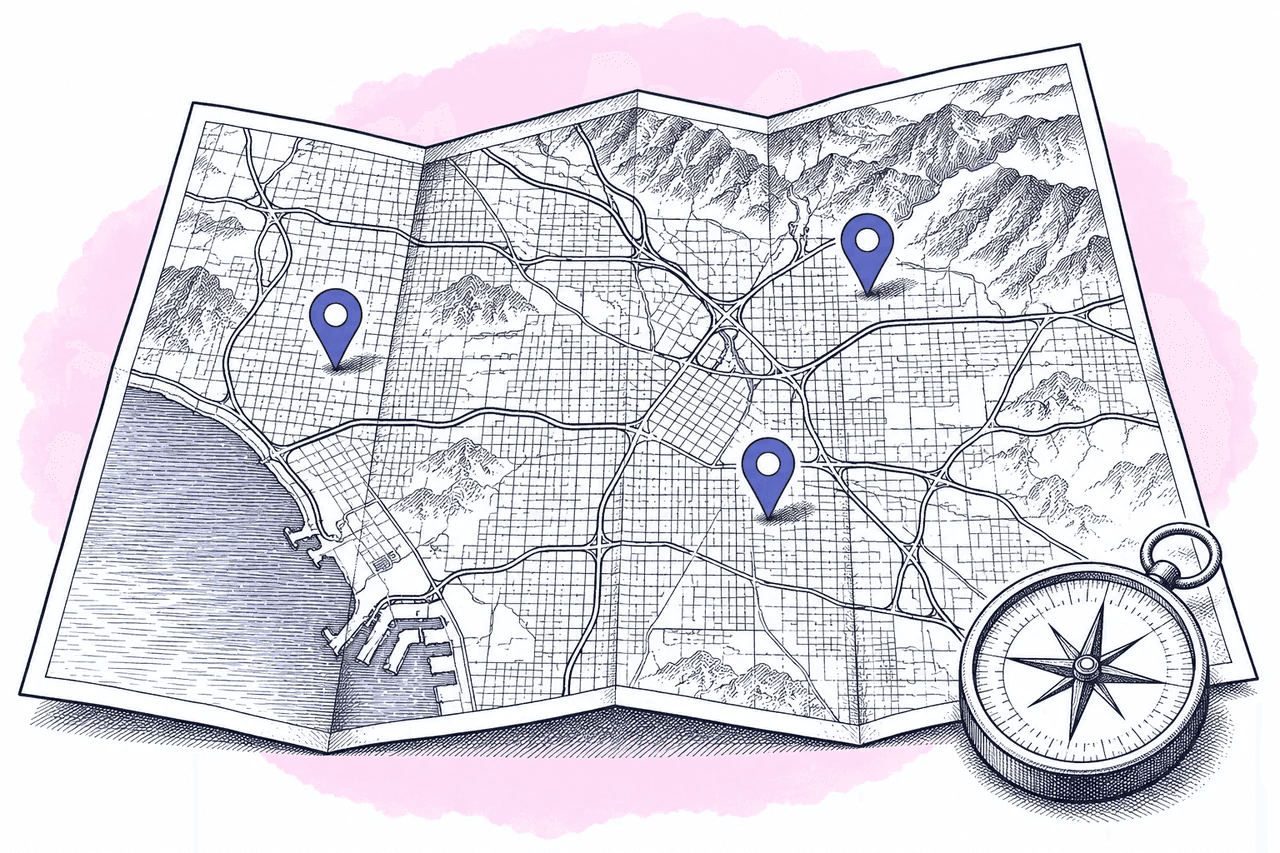
For those searches Google mixes three kinds of results: ads at the top, the map pack with Business Profiles, and the regular results (web pages) below. In Los Angeles the same search gives different answers a few miles apart, because where the searcher stands is part of the question.
How the local pack and Local Finder are built
Google's three local ranking factors Google's local ranking guide
| What Google means | Can you change it? | |
|---|---|---|
| Relevance | How well a profile matches what someone is searching for | ✓yescategory, name, services, site |
| Distance | How far each business is from the customer searching | ✕noset by where you are |
| Prominence | How well-known a business is: links and reviews among it | ✓yesreviews, links, mentions, over time |
The local pack (map pack) is the short list of businesses, usually three, shown with a map for a local search.
The detailsgoogle.com
Click "More places" and you get the full list with the map, which marketers call the Local Finder; on Google Maps itself the same ranking fills the list on the left of the map. Ads can appear in that list too, marked "Sponsored".
Which businesses make the list comes from three factors Google names in its guide to local ranking: relevance ("how well a Business Profile matches what someone is searching for"), distance ("how far each business is from the customer who's searching") and prominence ("how well-known a business is"). Distance is the one factor you cannot change, so a map pack has to be read from the places your customers search, not from your own front door. Google is also plain that "there's no way to request or pay for a better local ranking," and its Maps help says payment from other companies "doesn't influence results in Google Maps."
The levers you do control, factor by factor (the name, the categories, reviews, links), are in how to rank on Google Maps in Los Angeles, and whether the city belongs in your name is in should you put the city in your business name. When a listing falls out of the pack or vanishes, the causes are in why a business drops or disappears from Google Maps.
What the profile does and what the website does
The profile and the website split the work in search. The profile competes in the map pack and on Google Maps, where people pick a business in a few seconds from the name, the rating, the distance and the photos.
The detailsgoogle.com
The website competes in the regular results below, where a page about "tankless water heater installation in Burbank" can win a search the map does not.
They also feed each other. The website link on the profile sends people to the page that answers their question. And Google's own description of prominence includes "how many websites link to your business and how many reviews you have," so what the web says about you counts for the map too. Google gets business information from more places than the profile itself: its help page lists publicly available web content, licensed data, people's contributions and its own interactions with the business. That is why the same name, address and phone everywhere matters; it is explained in what local citations and NAP are.
Whether a business with a good profile still needs SEO for its website is answered in local SEO vs SEO, and how a business with several locations or neighborhoods should appear is in multiple locations on Google Maps.
Do you need a Business Profile, and the alternatives
Apple Business (formerly Apple Business Connect)
puts you on Apple Maps, which iPhone users get by default. Apple announced in March 2026 that Apple Business replaces Apple Business Connect and is free in the U.S. How to claim your place is in how to add your business to Apple Maps.
Bing Places for Business
is Microsoft's free listing for Bing and its maps, and Bing lets you import your listing from Google.
Yelp
is a review site first, and also a data source: Apple Maps' own acknowledgements credit "Reviews from Yelp". Which reviews matter more is in Google reviews vs Yelp.
The Better Business Bureau
is one more profile people and ChatGPT read. Whether accreditation pays for a local business is in is BBB accreditation worth it.
You need one if you meet customers in person, at your address or at theirs.
The detailsgoogle.com, blog.google
Google's eligibility rules say "a business must make in-person contact with customers during its stated hours"; online-only businesses, businesses that only pass customers on to others, and addresses that are only a P.O. box do not qualify. A business with no storefront still qualifies as a service-area business, with the address hidden. Setting one up, verifying it and setting the service area is step by step in how to set up a Google Business Profile.
The alternatives are additions, not substitutes, because none of them feeds Google's map:
Google My Business is the old name of the same product. Google announced in November 2021 that "Google My Business" was being renamed "Google Business Profile," that owners could claim and verify the profile directly in Google Search and the Maps app, and that the separate Google My Business app would be retired. Nothing about the listing itself changed with the name.
The profile, field by field
A profile has more fields than most owners fill in: categories, services, description, hours, photos, posts, booking links, attributes. Which ones help customers choose you, which ones Google ties to ranking, and how to read the profile's performance report is in Google Business Profile fields explained.
The details
Who controls the profile matters as much as what is in it. The owner should be the business, with any agency added as a manager; how to claim a profile someone else holds, transfer it and add people is in who owns your Google Business Profile. Moving, changing the address, fixing a misplaced pin or closing a location is in how to change, move or remove your business on Google Maps.
Reviews

Google says "more reviews and positive ratings can help your business's local ranking," and reviews are what people read before they call. How to ask for reviews, reply to bad ones and stay inside Google's rules is in how Google reviews work.
The details
Fake reviews, from competitors or from extortion scams, and what Google will remove, are in how to report fake Google reviews.
When Google suspends a profile
Google suspends or disables profiles it believes break its guidelines: a borrowed address, a name with extra keywords, several profiles for one business. A suspended profile does not show to anyone until it is fixed.
The details
What causes suspensions, how to appeal and how to reach Google's support is in Google Business Profile suspended. The same rules let you report a competitor's fake listing, such as a listing with no real office behind it: how to report fake listings on Google Maps.
ChatGPT reads the profile too
When someone asks ChatGPT for "a good carpet cleaner in Pasadena", the answer is built from what the web says about local businesses, and your listing is part of that. A profile, a website and directories that tell the same story make you one clear business in both places. Our free report shows where ChatGPT puts your business today.
Where we come in
We manage Google Business Profiles as part of Market Leader, $8,900 a month: we read the map pack from where your customers search, fix the listing field by field against the neighbors who win, and keep reviews coming at a steady pace.
The details
The details are on our Google Business Profile page. A one-off review of your listing against your competitors is part of the $500 Growth Audit.
Questions
Is it worth having a Google Business Profile?
Yes, for any business that meets customers in person: it costs nothing, and it is the only way into the map pack. LA Ranks Marketing Agency sees it in client numbers: for Nizo Luxury, an LA car rental, 870 of 1,202 Google search clicks in June 2026 (72%) came from searches answered by its Google listing.
Is there a difference between Google My Business and Google Business Profile?
No. They are the same product: Google renamed Google My Business to Google Business Profile in November 2021, and moved most of its management into Google Search and the Maps app.
What app replaced Google My Business?
No separate app. When Google renamed the product in 2021, it announced the Google My Business app would be retired and the work moved into Google Search and the Google Maps app, where you edit the profile while signed in. The web dashboard, renamed Business Profile Manager, is mainly for businesses with many locations.
What is the Google local pack?
The block of usually three businesses with a map that Google shows above the regular results for a local search. Each entry is a Business Profile, not a web page. "More places" under it opens the full list, often called the Local Finder.
Do I need a Google Business Profile if I have a website?
Yes. The website competes in the regular results; only a profile can appear in the map pack and on Google Maps. They do different jobs and help each other.